10 Tips What Toys Help With Problem Solving Skills?

Time:2026-10-18 Author:Madeline
0%

Choosing toys for young learners can feel surprisingly complicated. Parents often see bright colors, clever buttons, and impressive packaging. Yet problem-solving usually grows through active thinking, not passive entertainment. The right toy creates a small challenge, invites a child to test an idea, and allows mistakes without embarrassment.

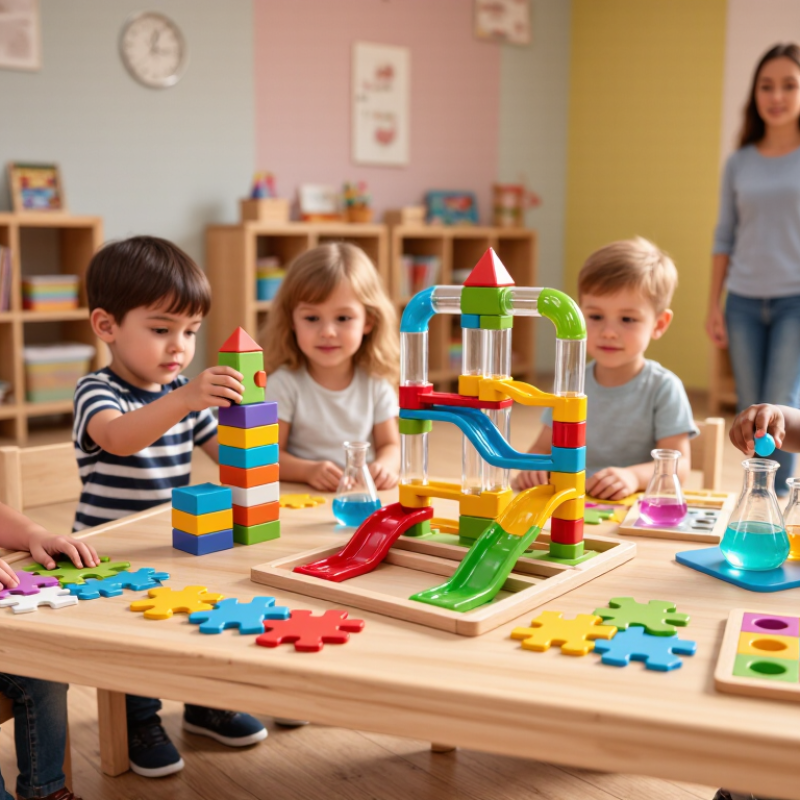
So, What toys help with problem-solving skills? Open-ended toys often provide the strongest starting point. Building blocks, puzzles, shape sorters, marble runs, strategy games, and simple science kits can encourage planning and flexible thinking. A child may build a tower, watch it collapse, and try a wider base. That moment matters. It shows experience, adjustment, and persistence in action.

Child development researcher Dr. Kathy Hirsh-Pasek has said, “Play is the work of childhood.” Her widely cited view supports a practical point: meaningful play needs time, choice, and interaction. Adults can strengthen the experience by asking, “What could you try next?” They should avoid solving every difficulty immediately. That can be harder than it sounds.

This guide explores ten toy categories that support reasoning in everyday play. It considers age, safety, durability, and the level of challenge. Some toys may work beautifully for one child and frustrate another. There is no perfect product. A puzzle left unfinished is not automatically a failure. Sometimes, it simply reveals that the challenge needs adjusting. Expect useful ideas, but also room for reflection. Observe the child, follow their curiosity, and let the learning develop gradually.

10 Tips What Toys Help With Problem Solving Skills?

What Problem-Solving Skills Mean in Childhood Development

What Problem-Solving Skills Mean in Childhood Development

Problem-solving skills help children notice challenges, explore choices, and adjust their actions. These abilities support planning, flexible thinking, memory, and early reasoning. A child solving a puzzle is not only matching pieces. They are testing ideas, noticing patterns, and learning from mistakes. In my experience, children often need time before adults offer help. Quick answers can remove the most valuable thinking. Still, independent play is not always successful. Some children need a small prompt, a demonstration, or emotional reassurance.

Tips: Choose puzzles with several possible approaches. Offer building pieces in different shapes. Use sorting games with colors, sizes, or textures. Ask, “What could you try next?” Provide simple mazes and matching tasks. Let children repair safe, broken play structures. Encourage pretend situations with missing tools. Invite them to predict what will happen. Change one rule in a familiar game. Praise effort, explanation, and revision instead of speed.

Adults should observe the process, not only the finished product. For example, a child may build a tall tower, watch it fall, and change the base. That moment shows practical reasoning. Ask open questions, but avoid turning play into a test.

Developmental research supports guided play, yet every child progresses differently. I sometimes expect neat solutions too soon. That expectation needs reflection. A messy attempt may contain more learning than a perfect result. Give children safe materials, manageable challenges, and enough quiet time to think.

How Different Toy Types Build Thinking and Reasoning Skills

Different toy types strengthen different thinking and reasoning skills. Puzzles help children notice shapes, patterns, and relationships. A child may rotate one piece repeatedly, then discover that color is the better clue. This small mistake supports flexible thinking. Simple sorting toys also build early logic by asking children to group objects by size, texture, or function. Adults can ask, “Why do these belong together?” instead of giving the answer.

Construction toys encourage planning, spatial awareness, and problem solving through hands-on testing. A child building a bridge may learn that a wide base prevents collapse. The lesson feels practical. Open-ended materials, such as blocks, clay, and recycled containers, allow several solutions rather than one correct result. Pretend-play sets develop reasoning in another way. Children organize roles, remember sequences, and adjust their plans when a story changes. However, imaginative play does not always produce visible progress.

Strategy games introduce prediction, memory, and decision-making. Children must consider consequences before moving a piece or choosing a card. Age-appropriate rules matter, because overly complex games can create frustration instead of learning. Adults should observe the process, not only the final result. Is the child explaining a choice, testing an idea, or copying a familiar pattern? That difference matters. It is also worth reflecting on adult involvement. Too much help can remove the challenge, while too little support may cause discouragement. The most useful toy is often one that leaves room for mistakes, questions, and a second attempt.

Ten Toy-Based Strategies for Encouraging Problem Solving

Ten Toy-Based Strategies for Encouraging Problem Solving

Problem solving grows through active play, not passive entertainment. UNICEF’s 2018 Learning through Play report links playful learning with cognitive, social, and emotional development. OECD’s PISA 2022 Creative Thinking assessment covered 64 countries and economies. It found that creative engagement relates to stronger thinking performance. Toys create small, safe problems children can solve repeatedly.

Use building pieces for planning and redesign. Offer puzzles with missing pieces to encourage flexible thinking. Add sorting trays for comparing size, color, or function. Use simple mazes to practice prediction and patience. Try construction sets without instructions. Let children invent the rules. Story figures can create conflicts that require several solutions. Board games teach turn-taking, strategy, and consequences. Water or sand tools invite testing and measurement. Matching cards build memory and pattern recognition. Recycled boxes support open-ended design challenges. Keep the materials visible.

Ask, “What could change?” Avoid solving the problem too quickly. A child may need silence before help. Some attempts will fail. That matters. Adults should observe, then offer one thoughtful question. I would not claim every toy works equally well. Research often measures play in controlled settings, while homes are messier. Still, short sessions can reveal useful reasoning. Record what the child tried, changed, and explained. This simple note supports more intentional play.

10 Tips: What Toys Help With Problem-Solving Skills?

Open-ended toys give children opportunities to plan, test ideas, notice cause and effect, adjust strategies, and persist through challenges.

How to read the chart: Each toy type is rated by the number of five core skills it directly encourages: planning, sequencing, spatial reasoning, flexible thinking, and persistence. The scores are based on the observable play opportunities each toy provides, not on brand-specific testing.

How to Choose Toys for Different Ages and Learning Needs

Choosing a problem-solving toy starts with the child, not the packaging. For infants, use large, washable objects with simple textures and safe grasping parts. They learn through dropping, reaching, filling, and repeating. For toddlers, try nesting cups, chunky puzzles, shape sorters, and simple matching games. Choose one challenge at a time. A toy should feel difficult, yet possible. If every attempt fails, frustration replaces curiosity.

Preschool children benefit from building pieces, pattern cards, mazes, and pretend-play materials. Offer open-ended tasks with several correct answers. This supports planning, flexible thinking, and language.

For school-age children, select strategy games, construction sets, logic puzzles, and basic science activities. Read the instructions together, then let the child lead.

For children with motor, sensory, or attention needs, adapt the experience. Use larger pieces, visual steps, quiet settings, or extra time. Accessibility matters more than novelty.

In my experience observing children play, the best toy changes with the child’s mood and confidence. Watch for repeated trials, long pauses, or new questions. Those moments reveal the right level of challenge. Adults can ask, “What could you try now?” instead of solving the task.

Check age guidance, small-part warnings, material quality, and supervision needs. I sometimes choose a toy that is too advanced. That mistake reminds me to observe before buying. Learning is messy.

Ways to Support Children During Problem-Solving Play

Problem-solving play begins when children face a small challenge and have time to explore it. A puzzle, building set, sorting tray, or simple maze can encourage planning, testing, and flexible thinking. Adults should stay nearby without taking control. Watch the child’s hands, listen to their words, and notice when frustration rises. A calm question often helps: “What could you try next?” Avoid giving the answer too quickly. Children need space to make mistakes.

Tip Offer choices instead of instructions. Ask, “Should we use the wide piece or the narrow piece?” This supports decision-making while keeping the child involved. If a tower falls, describe what happened without blame. “The bottom moved when you added that block.” Then invite another attempt. From practical play experiences, I have found that children often solve problems differently from adults. Their methods may look slow, but they can reveal strong imagination. Sometimes my suggested solution is not the best one.

Tip Adjust the challenge carefully. A task should feel difficult, not impossible. Remove one puzzle piece, add a timer only for older children, or provide a picture as a gentle guide. Praise effort, observation, and persistence rather than speed. “You noticed the corner matched” is more useful than “You are clever.” Let children explain their choices, even when their words seem unclear. Their explanations may change as they experiment. Keep materials safe, simple, and suitable for their age. Stay patient. Play can become messy.

FAQS

How do puzzles build thinking skills?

Puzzles help children notice shapes, colors, patterns, and relationships. A child may rotate one piece repeatedly. Then color becomes the better clue. That small mistake supports flexible thinking.

What can sorting toys teach children?

Sorting toys build early logic through simple comparisons. Children can group objects by size, texture, color, or use. Ask, “Why do these belong together?” Avoid giving the answer too quickly.

How do construction toys support problem solving?

Building pieces encourage planning and spatial awareness. A child building a bridge may discover that a wide base prevents collapse. The result feels practical. Rebuilding is part of learning.

Why are open-ended materials useful?

Blocks, clay, and recycled containers allow several possible solutions. Children can design a tower, tunnel, or small vehicle. There may be no single correct result. That freedom can feel confusing sometimes.

How does pretend play develop reasoning?

Pretend play helps children organize roles and remember sequences. A story may change when one character leaves. Children then adjust their plans. Progress may not look visible.

What do strategy games teach children?

Strategy games practice prediction, memory, turn-taking, and decision-making. Children consider consequences before moving a piece. Rules should match their abilities. Difficult rules can create frustration instead.

How can adults support toy-based problem solving?

Observe the process, not only the final result. Ask, “What could change?” Give the child time to think silently. Offer one thoughtful question, not a complete solution.

Which toy activities encourage testing and measurement?

Simple mazes encourage prediction and patience. Water or sand tools support testing and measurement. Matching cards build memory and pattern recognition. Keep materials visible. Short sessions can still show useful reasoning.

Is every educational toy equally effective?

No toy works equally well for every child. Interest, age, materials, and adult support matter. Too much help removes the challenge. Too little support may cause discouragement. This needs reflection.

Conclusion

Problem-solving skills in childhood help children observe carefully, make decisions, test ideas, and learn from mistakes. What toys help with problem-solving skills? Open-ended toys such as building blocks, puzzles, sorting games, matching activities, mazes, construction sets, and pretend-play materials can encourage children to think logically and creatively. Different toy types support different abilities, including planning, spatial awareness, memory, communication, patience, and flexible thinking.

Adults can strengthen this learning by offering age-appropriate challenges, allowing children time to explore, asking thoughtful questions, and celebrating effort rather than focusing only on correct answers. Younger children may benefit from simple stacking, matching, and shape-sorting activities, while older children can try strategy games, multi-step construction tasks, and cooperative challenges. Toys should be safe, manageable, and suited to each child’s interests and developmental level. During play, caregivers can provide gentle guidance without taking control, helping children explain their choices, try new approaches, and view mistakes as valuable opportunities to learn.

Madeline

Madeline

Madeline is a dedicated marketing professional with a wealth of expertise in our company's core offerings. With a keen understanding of the industry, she brings a unique perspective to her role, consistently delivering high-quality content that highlights the superior aspects of our products. As......