Why Are Educational Toys Beneficial for Child Development?

Time:2026-05-01 Author:Henry
0%

In today's educational landscape, the role of toys has evolved significantly. The question arises: "Why are educational toys good for children?" A 2017 report from the American Academy of Pediatrics highlights that play is essential for cognitive, social, and emotional development. Educational toys stimulate curiosity and promote problem-solving skills in children. Research indicates that children who engage with educational toys show improved language and math skills by the age of three.

Furthermore, a study by the Smithsonian Early Enrichment Center asserts that interactive toys foster creativity. These toys encourage children to explore and experiment, which is vital for brain development. However, it's important to choose age-appropriate toys. Some toys may not meet developmental needs, leading to frustration or disengagement. Parents should carefully evaluate the educational value of toys in relation to their child's interests.

While educational toys can be beneficial, they should complement active play and social interaction. Relying solely on toys for child development may overlook the importance of real-world experiences. Children thrive when engaged in various activities, including unstructured play. In conclusion, the right educational toys can enhance learning and development, but balance and diversity in play is essential.
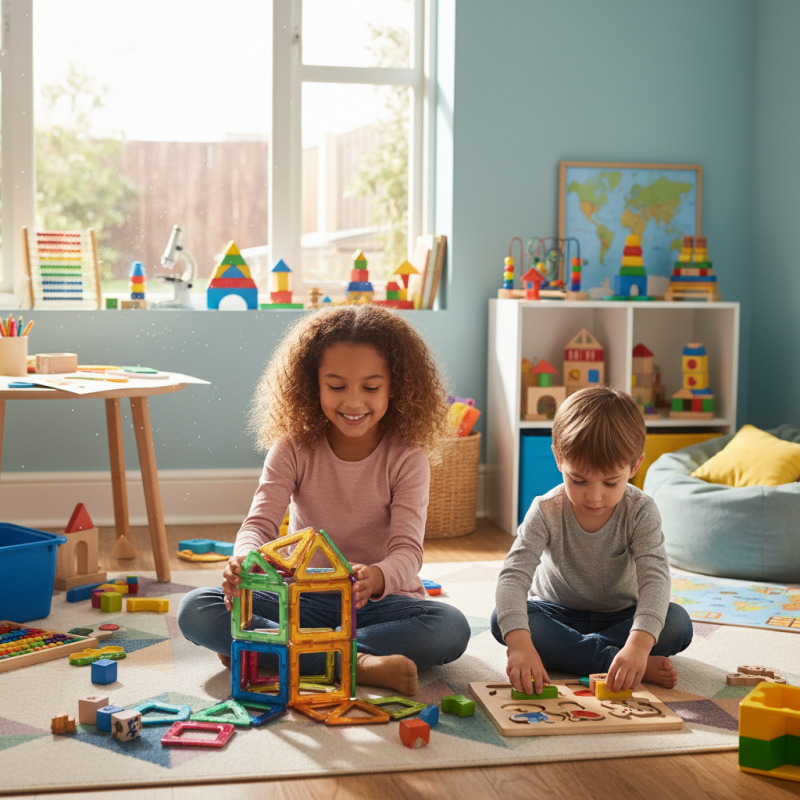
Why Are Educational Toys Beneficial for Child Development?

Benefits of Educational Toys in Enhancing Cognitive Skills in Children

Educational toys play a crucial role in enhancing cognitive skills in children. These toys stimulate curiosity and creativity, essential for learning. Engaging with puzzles or blocks promotes problem-solving abilities. Children begin to understand shapes, colors, and patterns. Each play session allows them to explore new concepts. This hands-on experience deepens their understanding.

Tips for parents: Choose toys that encourage exploration. Opt for items that require thinking and creativity. Limit screen time; replace it with interactive toys. Encouraging open-ended play can foster imagination and innovation.

While educational toys can be beneficial, they aren’t a magic solution. Some toys may not engage all children equally. Gauge your child's interests; not every toy will spark joy. It’s important to reflect on their responses. This observation can guide future toy selections. Remember, it’s about finding the right balance between fun and learning.

Benefits of Educational Toys in Enhancing Cognitive Skills in Children

This chart illustrates the percentage of improvement in various cognitive skills among children who use educational toys. As shown, educational toys significantly enhance problem-solving abilities, memory, creativity, and spatial skills, which are crucial for overall cognitive development.

Role of Educational Toys in Promoting Social and Emotional Development

Educational toys play a significant role in enhancing social and emotional development in children. These toys encourage interaction among peers, helping kids learn vital social skills. For instance, playing with building blocks can lead to collaboration, as children work together to create structures. They learn to share ideas, negotiate, and resolve conflicts. Such teamwork fosters a sense of community and belonging.

Moreover, educational toys can help children express their emotions. When engaged with dolls or action figures, kids often narrate stories. This imaginative play allows them to explore feelings like joy, sadness, or frustration. They may reenact scenarios, which can be therapeutic. It helps children better understand their emotions and those of others.

However, not all children respond to toys in the same way. Some may find them overwhelming or fail to engage. Parents and caregivers should observe what resonates with each child. This reflects the need for individualized approaches. By doing so, we can ensure that educational toys fulfill their potential, fostering not just cognitive skills but also emotional awareness in a supportive environment.

Impact of Hands-On Learning through Educational Toys on Problem-Solving Abilities

Hands-on learning through educational toys plays a crucial role in developing children's problem-solving abilities. Studies indicate that children engage better with toys that promote active participation. According to the American Academy of Pediatrics, interactive play enhances cognitive development. Children learn to think critically when faced with challenges presented by these toys.

When children manipulate objects, they practice logical reasoning. They discover cause-and-effect relationships, a foundational skill for problem-solving. For instance, building blocks require planning and experimentation. Research shows that children who regularly use such toys demonstrate improved spatial awareness and reasoning skills.

Moreover, educational toys often encourage social interaction. Group play can introduce children to various perspectives. A study from the University of Cambridge found that shared problem-solving among peers fosters cooperative skills. This can be invaluable for later challenges. While many children naturally gravitate towards solo play, the benefits of collaboration are clear. Interaction cultivates empathy and negotiation skills, necessary for holistic development. Such engagement with educational toys leads to deeper learning experiences, making playtime far more than a leisure activity.

Choosing the Right Educational Toys for Various Age Groups and Developmental Stages

Choosing educational toys for children involves understanding their developmental stages. Infants benefit greatly from toys that stimulate sensory engagement. Textured blocks and rattles encourage tactile exploration. Music toys can spark auditory interest. Simple cause-and-effect toys are also ideal. They foster basic reasoning skills.

As children grow, their needs change. Toddlers enjoy toys that promote fine motor skills. Puzzles and shape sorters are excellent choices. They challenge children while enhancing problem-solving abilities. For preschoolers, toys that support imaginative play are key. Dress-up costumes and building sets encourage creativity and social interaction.

At every stage, the right toy can encourage learning and development. However, parents should remain mindful of their child's unique interests. What works for one child may not engage another. Observation is essential. The journey of selecting educational toys should be playful yet thoughtful.

The Influence of Educational Toys on Creativity and Imagination in Young Minds

Educational toys hold remarkable power in shaping young minds. They serve as tools for exploration, sparking creativity and imagination. For instance, a simple building block can transform into a castle or a spaceship. As children engage with such toys, they learn to think outside the box. Their imaginations flourish as they build unique structures.

These experiences foster problem-solving skills. A child may encounter a challenge while constructing a tower. They learn to adjust their methods or choose different pieces. This trial-and-error process is crucial for cognitive development. It allows them to formulate ideas, test them, and reflect on the outcomes. Some parents may overlook these moments as mere play. However, they are vital learning opportunities.

Additionally, educational toys promote collaborative play. When children share toys, they communicate and negotiate. They express their ideas and collaborate on projects. This interaction nurtures social skills like empathy and teamwork. There can be moments of frustration too, as conflicts arise during play. Addressing these emotions teaches children valuable lessons about relationships.

Ultimately, the influence of educational toys extends far beyond mere fun. They lay the groundwork for creativity, self-expression, and thoughtful reasoning in a child's life.

FAQS

: What types of toys are best for infants?

: Infants benefit from sensory toys like textured blocks and rattles. Music toys stimulate auditory interest.

How do toys help toddlers?

Toddlers need toys that develop fine motor skills. Puzzles and shape sorters challenge them and enhance problem-solving.

What should preschool toys focus on?

Preschool toys should promote imaginative play. Costumes and building sets encourage creativity and social interaction.

Why is observation important in toy selection?

Each child is unique. What excites one may not interest another. Observing helps find the right engagement.

How do educational toys influence creativity?

Educational toys spark imagination. Simple blocks can become anything, encouraging children to think outside the box.

What role does trial and error play in learning?

Children learn to adjust methods when faced with challenges. This process is crucial for cognitive growth and reflection.

How do toys promote social skills?

Sharing toys encourages communication and collaboration. Children express ideas and negotiate, fostering empathy and teamwork.

Can playtime lead to frustration?

Yes, conflicts can arise. Addressing these emotions teaches children important lessons about relationships and resolution.

Are play and learning intertwined?

Absolutely. Play is often seen as fun, but it is a vital learning opportunity for children.

How important is the choice of educational toys?

The right toy enhances learning and development. Thoughtful selection ensures playful, meaningful engagement for children.

Conclusion

Educational toys play a crucial role in child development, offering multiple benefits that enhance cognitive and emotional growth. One of the key reasons why educational toys are good for children is their ability to promote cognitive skills by engaging young minds in problem-solving activities and hands-on learning. Additionally, these toys foster social and emotional development, as they often encourage cooperative play and communication among peers, helping children build crucial interpersonal skills.

Furthermore, educational toys stimulate creativity and imagination, allowing children to explore their thoughts and ideas in a playful context. It's essential for parents to choose suitable educational toys that align with various age groups and developmental stages to optimize these benefits. Overall, integrating educational toys into playtime can significantly enrich a child's growth and learning experience.

Henry

Henry

Henry is a dedicated marketing professional with a profound expertise in the company's offerings. With years of experience in the industry, he possesses an impressive understanding of the market dynamics and consumer behaviors that drive success. Henry is committed to sharing his insights through......