GEEGO Toys
Creativity rarely arrives with a flashing light or a perfect instruction manual. It grows when children build, change, question, and try again. This guide explores China’s top 10 toys for encouraging those habits, from magnetic tiles and wooden blocks to science kits, art sets, and imaginative role-play toys. The focus is not on price or popularity alone. Each toy should offer open-ended play, safe materials, age-appropriate challenges, and enough freedom for a child’s ideas to lead.
Developmental psychologist Kathy Hirsh-Pasek explains, “Play is the way children learn.” That simple observation shapes this article’s approach to How to use toys to boost creativity. A block tower can become a bridge, a shop, or a creature’s home. A cardboard robot may look unfinished, but that unfinished quality invites more thinking. Parents can ask, “What else could it do?” instead of showing the only correct answer. Small changes matter.
No toy guarantees originality. Not every child will enjoy every activity, either. Our selection may also overlap between construction, art, science, and pretend play. That is useful, not a flaw. Creative development is rarely tidy. We will consider how each toy works in real homes, including storage, durability, adult guidance, and opportunities for independent play. Some products may need closer supervision, especially when they contain small parts. The strongest choice is often the toy that leaves room for a child to surprise everyone, including themselves.
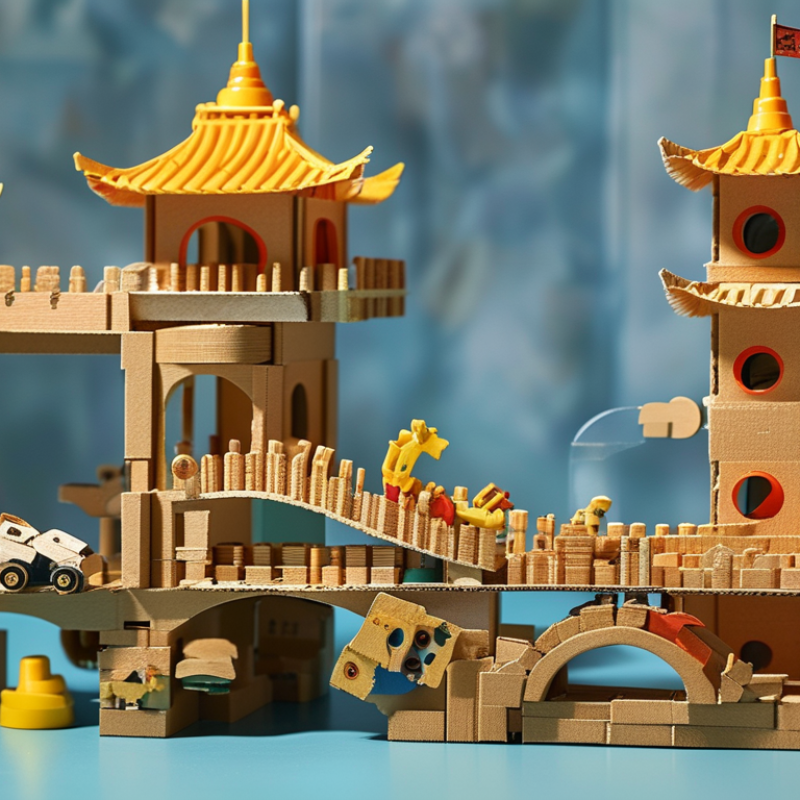
China’s top ten creative toys often share one feature: they leave room for children to decide what happens next. Building blocks can become a bridge, a kitchen, or a strange little city. Open-ended play matters.
An effective toy offers a manageable challenge without giving every answer. Children should test, change, and try again. During classroom activities, I have seen children stay engaged longer when a toy allows several solutions. Loose parts, drawing tools, simple puzzles, role-play sets, and construction materials can support this process. The best choice matches a child’s age, interests, and coordination. It should also use durable, non-toxic materials, smooth edges, and secure parts. Safety is part of creative learning, not a separate concern.
Adults influence the experience too. Ask, “What could this become?” instead of correcting every design. Wait before helping. That pause can feel uncomfortable. Sometimes children lose interest, and the toy may not be the problem. The task may be too difficult, too repetitive, or poorly timed. I have also learned that more toys do not always create more ideas. A small basket of carefully selected materials can encourage deeper play. Still, no toy works perfectly for every child. Observation and patient adjustment remain essential.
What makes a toy effective for children’s creativity?
China’s creative toy tradition offers more than colorful entertainment. It gives children problems to solve and stories to invent. These ten choices stand out: tangrams, paper-folding kits, shadow puppets, bamboo helicopters, diabolo, nine-linked rings, wooden building blocks, clay modeling sets, Go boards, and paper-cutting kits.
I have seen children turn a simple tangram into animals, houses, and imaginary machines. A shadow puppet set can become a homemade theater beside the sofa. Diabolo develops timing, but children often create their own movements. Nine-linked rings build patience through repeated attempts. Building blocks support planning, although some sets may limit creativity when instructions dominate. Go introduces strategy and pattern recognition. Clay, paper, and bamboo toys invite changes that fixed electronic games rarely allow.
Tips: Choose open-ended toys with safe, non-toxic materials. Check age guidance and inspect small parts regularly. Ask, “What else could this become?” instead of showing the correct answer. Leave space for mistakes. A child’s uneven paper dragon may reveal more imagination than a perfect model. Adults should observe quietly, then offer one useful question. Rotate toys every few weeks to renew interest. Some traditional toys require practice, so frustration is normal, but constant difficulty can discourage creative thinking.
China Top 10 Toys to Boost Creativity for Kids?
Creative Skills Developed by Each Toy
Children create more freely when toys invite choices, mistakes, and fresh solutions. Building blocks strengthen spatial reasoning, planning, and problem-solving. Jigsaw puzzles develop pattern recognition and patience. Drawing materials encourage visual expression and fine-motor control. Modeling clay supports three-dimensional thinking and hand strength. Magnetic tiles introduce balance, geometry, and flexible design. These skills appear during play, not through forced lessons.
Role-play sets help children build stories, empathy, and communication skills. Simple musical instruments develop rhythm, listening, and confidence. Science experiment kits encourage observation, prediction, and careful testing. Strategy board games teach decision-making, memory, and respectful discussion. Screen-free coding toys develop sequencing and logical thinking. From my experience, children often use these toys differently than adults expect. That is useful. A puzzle may become a city, while clay may become a “machine” with no clear purpose.
Tips: Choose open-ended toys with safe, durable parts. Offer paper, string, and recycled boxes nearby. Ask, “What could change?” instead of giving instructions. Let children struggle briefly, then provide one small hint. Rotate toys every few weeks to renew interest. Avoid praising only the final result. I sometimes interrupt too quickly, and that can reduce experimentation. Quiet observation may be the better teaching tool. Always check age guidance and supervise small pieces.
China’s top ten toy categories can support creativity when matched with a child’s developmental stage. These include building blocks, puzzles, art materials, role-play sets, construction kits, musical toys, science sets, board games, outdoor toys, and sensory play tools. The category matters less than the child’s ability to use it safely and independently.
For children under three, choose large blocks, washable crayons, stacking cups, and soft sensory toys. Avoid small detachable parts. At ages three to five, pretend kitchens, simple puzzles, clay, and magnetic building pieces encourage language and hand control. Watch the child play. A toy that seems easy may still require patient guidance. I once bought an advanced puzzle too early, and the child quickly lost interest.
Between six and eight, children often benefit from construction kits, beginner science activities, board games, and musical instruments. Clear instructions help, but open-ended tasks create more original ideas. From nine onward, strategy games, model-building sets, coding-free engineering toys, and detailed art tools can strengthen planning and persistence. Check age labels, material information, sharp edges, and battery compartments before buying. Local safety standards matter. Adult supervision remains important, especially during experiments or outdoor play. Some children prefer repetition, not constant novelty. That preference deserves respect.
Choosing among China’s top ten creativity-boosting toys should begin with safety, not popularity. The U.S. Consumer Product Safety Commission reported about 231,000 toy-related emergency-room injuries among children under 15 in 2023. It also recorded 11 toy-related deaths. These figures make small parts, cords, magnets, sharp edges, and unstable structures important screening points.
Quality is more than attractive packaging. Parents should check age labeling, readable instructions, material information, and batch details. Toys should meet recognized requirements such as ASTM F963 or EN 71, where applicable. A 2024 European Safety Gate report continued to identify toys among frequently notified dangerous products. However, compliance marks are not a complete guarantee. I would still inspect seams, paint, wheels, and battery compartments by hand. Children can expose weaknesses quickly.
Play value also needs careful observation. Open-ended building sets, drawing tools, pretend-play kits, puzzles, and simple science toys can encourage planning and problem-solving. The American Academy of Pediatrics describes play as important for language, social, emotional, and cognitive development. Keep play areas bright and uncluttered. Supervise younger children closely, especially near tiny pieces. Rotate toys instead of offering everything at once. This can reduce mess and renew interest. My own judgment would remain cautious: a toy may promise creativity, yet become frustrating if instructions are unclear or parts break after one afternoon. Parents should watch how the child actually plays, then adjust the choice.
| No. | Toy Category | Typical Age | Creativity Benefits | Safety Considerations | Quality Checks | Suggested Playtime |
|---|---|---|---|---|---|---|
| 1 | Construction Blocks | 3–8 years | Encourages spatial reasoning, planning, problem-solving, and open-ended model building. | Avoid small pieces for children under 3. Check for secure connections, rounded edges, and non-detachable parts. | Look for durable, non-brittle plastic or wood, smooth surfaces, and clear age labeling. | 20–45 minutes |
| 2 | Magnetic Building Sets | 6+ years | Supports geometric thinking, design experimentation, and three-dimensional creativity. | Magnets must be fully enclosed and strongly secured. Swallowed high-powered magnets can cause serious internal injuries. | Inspect regularly for cracked housings, loose magnets, or damaged connectors. | 20–40 minutes |
| 3 | Art and Drawing Kits | 3–10 years | Develops visual expression, color awareness, storytelling, and fine-motor control. | Use materials labeled non-toxic and washable. Do not allow children to chew crayons, markers, or paint tools. | Check for securely fitted caps, odor-free materials, strong paper, and child-safe tools. | 20–60 minutes |
| 4 | Modeling Clay and Dough | 3–8 years | Promotes tactile exploration, imagination, hand strength, and character or object design. | Choose non-toxic, age-appropriate modeling material. Supervise younger children because clay may be swallowed. | Material should remain pliable without excessive oil, strong odor, or color transfer. | 15–40 minutes |
| 5 | Pretend-Play Sets | 3–8 years | Builds language, social skills, role-play, decision-making, and narrative creativity. | Check for accessible edges, secure handles, stable bases, and accessories that are too small for young children. | Prefer sturdy construction, washable surfaces, and components that withstand repeated handling. | 30–60 minutes |
| 6 | Puzzles and Pattern Games | 3–10 years | Strengthens concentration, visual discrimination, sequencing, and flexible thinking. | Choose piece sizes appropriate for the child’s age. Avoid sharp corners, splintered wood, and easily torn surfaces. | Pieces should fit accurately, resist bending, and have clear, durable printing. | 15–35 minutes |
| 7 | Science and Discovery Kits | 6–12 years | Encourages questioning, observation, experimentation, and evidence-based thinking. | Adult supervision may be required. Follow instructions, use protective equipment when specified, and avoid unsafe household substitutions. | Check that tools are functional, instructions are complete, and experiment materials are sealed and clearly identified. | 30–75 minutes |
| 8 | Musical Instruments | 3–10 years | Supports rhythm, auditory awareness, self-expression, coordination, and collaborative play. | Avoid excessively loud toys. Check for secure mouthpieces, smooth edges, and parts that cannot easily detach. | Look for stable tuning, strong fasteners, clean surfaces, and materials that tolerate frequent use. | 10–30 minutes |
| 9 | Puppets and Storytelling Toys | 3–9 years | Develops communication, empathy, sequencing, vocabulary, and original storytelling. | Inspect eyes, buttons, stitching, cords, and other attachments. Avoid long loose cords for younger children. | Fabric should be colorfast, washable, and free from loose seams or shedding fibers. | 20–45 minutes |
| 10 | Wooden Balance and Marble-Run Sets | 5–10 years | Combines engineering, cause-and-effect learning, sequencing, and iterative problem-solving. | Use only under age guidance because pieces may be small. Check stability and prevent access to loose marbles by younger children. | Wood should be smooth and splinter-free, with secure joints and accurate-fitting components. | 20–45 minutes |
Parent checklist: Confirm the recommended age, inspect the toy before each use, follow the manufacturer’s instructions, and look for applicable toy-safety testing such as ASTM F963, EN 71, ISO 8124, or relevant local requirements. Toys containing small parts should not be given to children under 3 years unless specifically designed and labeled for that age group.
An effective toy leaves room for decisions. Building blocks might become a bridge, kitchen, or unusual little city.
They support several solutions. Children can test ideas, change designs, and try again without following one fixed answer.
Loose parts, drawing tools, simple puzzles, role-play sets, and construction materials can support planning and imagination.
Match the toy with the child’s age, interests, and coordination. A difficult toy may create frustration instead of curiosity.
Look for smooth edges, secure parts, durable materials, and non-toxic components. Inspect small pieces, cords, magnets, and battery compartments.
Not completely. Check readable instructions, age labels, material details, and batch information. Inspect seams, paint, wheels, and weak-looking parts.
Ask, “What could this become?” Then wait before helping. That pause may feel uncomfortable, but children need thinking time.
Not always. A small basket may encourage deeper play. Rotate materials to reduce clutter and renew interest.
Observe carefully. The toy may be too repetitive, difficult, or poorly timed. I might misjudge the cause at first.
No toy fits every child. Watch actual play, adjust the choice, and accept that some creative ideas develop slowly.
The best toys for children’s creativity are open-ended, engaging, and flexible enough to support more than one way of playing. This article explores ten Chinese toys that encourage imagination, problem-solving, storytelling, building, drawing, role-play, and hands-on discovery. It explains the creative skills developed by each toy and shows How to use toys to boost creativity through questions, free exploration, cooperative play, and opportunities for children to design their own solutions rather than follow fixed instructions.
The guide also helps parents choose toys according to a child’s age, interests, abilities, and developmental stage. Younger children may benefit from simple sensory and stacking activities, while older children can explore construction, strategy, art, and imaginative challenges. Alongside creativity, parents should consider safe materials, sturdy construction, age-appropriate parts, supervision, balanced playtime, and the value of allowing children to play independently.
