China Top 10 Toy Types Why Do Some Help Kids Focus Better?

Time:2026-09-08 Author:Amelia
0%

China’s toy industry offers a wide range of choices, from wooden puzzles and building blocks to sensory toys, art sets, and strategy games. This guide examines ten popular toy types and their possible effects on children’s attention. It asks a practical question: Why do some toys help kids focus better?

Focus is not simply quiet behavior. A child sorting colored tiles, fitting a puzzle piece, or carefully balancing a small tower is practicing attention through visible actions. Developmental research suggests that toys with clear goals, manageable challenges, and limited distractions may support longer engagement. Teachers and parents often observe this during play, especially when children can choose their own pace and correct mistakes independently.

Safety and design still matter. Reliable manufacturers should provide age guidance, durable materials, and appropriate testing information. A well-made toy should not depend on exaggerated educational claims. A simple wooden maze may encourage concentration more effectively than a brightly lit product with too many sounds. Sometimes, less really is more.

However, no toy works equally well for every child. A quiet puzzle may frustrate one child but absorb another for twenty minutes. Attention also changes with sleep, mood, age, and the surrounding environment. Any ranking of China’s top ten toy types should therefore remain thoughtful, not absolute. The strongest choices usually invite active participation, offer achievable difficulty, and leave room for imagination. Small details matter. A focused child may simply be turning one last piece into place.
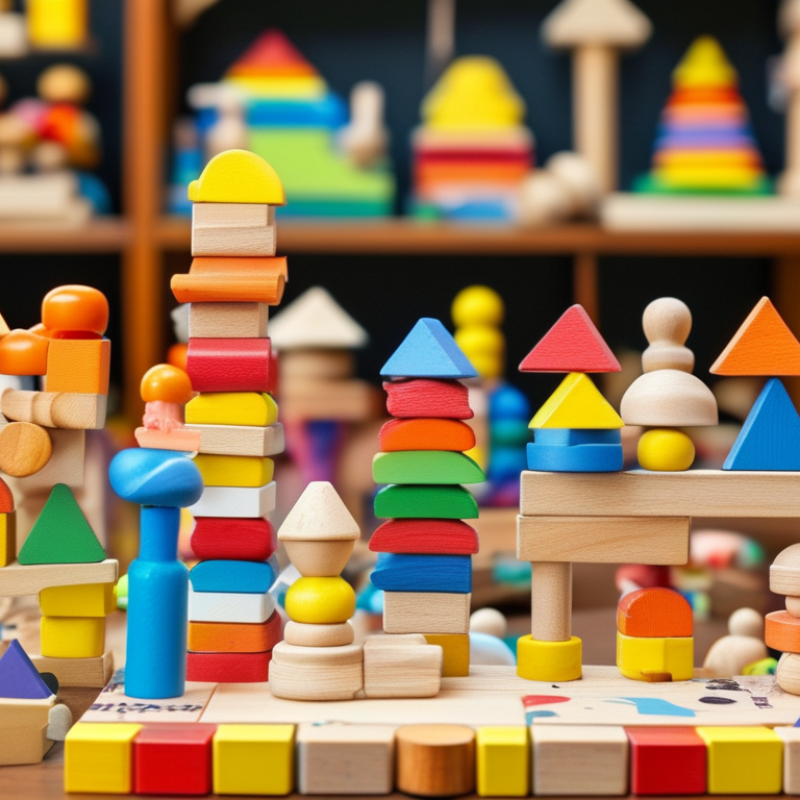
China Top 10 Toy Types Why Do Some Help Kids Focus Better?

What Defines the Top Toy Types in China

What Defines the Top Toy Types in China

China’s leading toy types are not defined by noise or novelty. They combine safety, age suitability, learning value, and cultural familiarity. The China Toy and Juvenile Products Association reported domestic toy retail sales of about 90.5 billion yuan in 2023, rising 2.1% year on year. This expanding market gives parents more choices, but also creates confusion.

Construction sets, puzzles, art materials, and role-play toys often support longer attention. They provide clear goals, small challenges, and visible progress. A child may fit one wooden piece, pause, and try again. That pause matters. Research from the American Academy of Pediatrics links play with developing executive function, including self-control and flexible thinking. However, no toy guarantees better focus. A difficult puzzle can frustrate a tired child.

The strongest toy types also reflect China’s safety expectations. GB 6675 establishes mandatory requirements for toy safety, including mechanical and physical properties, flammability, and chemical limits. Parents increasingly examine age labels, material information, and small-part warnings. The 2024 global toy market review by Circana also showed that value and product purpose strongly influence purchasing decisions during uncertain economic conditions. This helps explain the appeal of durable, reusable toys. Still, “educational” is sometimes only a marketing word. A toy with bright lights may hold attention briefly, while a simple building task may encourage deeper concentration. The difference depends on the child, the setting, and adult involvement.

China’s Top 10 Toy Types: Why Do Some Help Kids Focus Better?

What defines the leading toy types? Toys that require sustained attention, clear goals, problem-solving, and limited digital distraction generally offer stronger focus-support features.

Focus-support index, 0–100: a comparative, evidence-informed score based on task persistence, rule structure, problem-solving demand, fine-motor involvement, and distraction level. It is not a market-share ranking or a clinical measurement.

How Different Toy Types Support Children’s Attention

Different toy types support children’s attention in different ways. Puzzles ask children to hold a goal in mind while testing small solutions. Building toys add planning, spatial thinking, and gentle persistence. Matching games strengthen visual attention because children compare shapes, colors, and positions. These activities usually work best when the challenge feels possible, but not effortless.

Sensory toys can help some children settle through safe, repeated movements, such as squeezing, sorting, or threading. Art materials encourage sustained attention when children choose colors and control each step. Pretend-play toys support focus through stories, roles, and simple rules. Board games add turn-taking and memory, although waiting may frustrate younger children. Quiet books and maze activities offer fewer distractions than loud, rapidly changing toys.

The room matters too. A child may focus longer with one toy on a clear table. Short play periods can be more useful than forced practice. Adults should watch for signs of tiredness, confusion, or overstimulation. No toy improves attention in exactly the same way for every child. That part is easy to overlook. Children’s interests, sleep, age, and learning needs all influence the result. A toy that seems excellent in a classroom may fail at home because the setting feels noisy or rushed. Careful observation remains more reliable than promising packaging.

Why Open-Ended Toys May Improve Focus and Creativity

Open-ended toys do not prescribe one correct result. Blocks become bridges, shops, or strange little animals. Loose parts invite children to choose, test, and rebuild. That repeated decision-making can strengthen attention because the child owns the direction.

The American Academy of Pediatrics’ 2018 clinical report connects play with executive functions, including self-regulation and working memory. UNICEF’s 2018 Learning Through Play report identifies five useful features: joy, active engagement, meaning, iteration, and social interaction. These qualities explain why puzzles, construction sets, drawing materials, and pretend-play objects may hold attention longer than toys with one fixed action.

The evidence is promising, not perfect. WHO’s 2020 guidelines recommend no more than one hour of sedentary screen time for children aged two to four. Less passive time creates room for hands-on play, but it does not guarantee concentration. A child may abandon an expensive construction set after three minutes. That limitation matters. Caregivers can offer fewer pieces, reduce background noise, and pause before helping. Watch what happens. Do children return, change the design, or explain their choices? Open-ended play supports creativity, yet some children still need clear boundaries, simple instructions, or adult modeling before independent focus appears.

How Age, Play Goals, and Sensory Needs Affect Toy Choice

Across ten widely seen toy types in China, age strongly shapes attention. Toddlers often engage longer with stacking cups, large building blocks, and simple shape sorters. They need clear actions and quick results. Preschool children may prefer puzzles, pretend-play sets, art materials, and matching games. These toys support language, planning, and flexible thinking. School-age children can manage construction sets, board games, music toys, and outdoor movement toys with more rules. The best choice depends on the play goal, not the toy’s price or appearance.

A child practicing patience may benefit from a small puzzle with visible progress. A child developing fine-motor control might enjoy threading beads or connecting chunky pieces. Sensory needs also change the decision. Some children focus better with quiet textures, soft lighting, or gentle resistance. Others need movement before sitting down. A short jumping break can make a table activity possible. Watch the details: Does the child avoid loud sounds, press objects firmly, or abandon tasks after two minutes? These signals can guide trial choices, but they do not provide a diagnosis. In classroom observations, I have seen attractive toys fail because they were too noisy or difficult. My first choice is not always right. Reduce the pieces, change the setting, and watch again. A calm corner sometimes works better than another new toy.

China Top 10 Toy Types: Why Do Some Help Kids Focus Better? — How Age, Play Goals, and Sensory Needs Affect Toy Choice

Focus-support ratings are general, evidence-informed guidance rather than clinical assessments. Children differ in development, interests, environment, and sensory preferences.
Toy type Typical starting age Primary play goal Focus-support potential Why it may support focus Sensory considerations Best selection features
Construction blocks 12 months+ Building, planning, spatial reasoning, and fine-motor practice High when the child chooses a manageable challenge Open-ended building can encourage sustained attention, sequencing, problem-solving, and persistence without requiring one correct answer. Hard plastic may feel uncomfortable for some children; large pieces are easier to handle and safer for younger children. Large, easy-to-grip pieces; varied shapes; quiet storage; optional picture prompts.
Jigsaw puzzles 2 years+ Visual discrimination, part-to-whole reasoning, and task completion High for children who enjoy quiet, structured tasks A clear endpoint, limited visual field, and gradual problem-solving demands can make it easier to maintain attention. Small pieces can be frustrating or unsafe for toddlers; high-contrast images may help children with visual-processing difficulties. Age-appropriate piece count; sturdy pieces; clear image; low-glare surface.
Memory and matching games 3 years+ Working memory, visual attention, turn-taking, and rule following High in short, predictable sessions Remembering locations and waiting for turns exercises attention control and working memory in a social setting. Too many cards, competitive pressure, or lengthy rounds may overload or discourage some children. Few cards for beginners; simple rules; cooperative play option; quiet materials.
Strategy and board games 4 years+ Planning, flexible thinking, self-regulation, and social communication Medium to high, depending on complexity Rules and turn structure create external organization, while strategic choices encourage children to monitor and adjust their actions. Noise, competition, waiting, or losing may be difficult for children who are sensitive to frustration or social demands. Short rounds; cooperative rules; visual turn markers; adjustable difficulty.
Drawing, coloring, and modeling materials 2 years+ Creative expression, fine-motor control, and visual planning Medium to high for self-directed activities Repetitive hand movements and open-ended expression can help some children settle into a sustained activity. Some children dislike sticky textures, strong smells, or messy surfaces; washable, unscented materials can reduce discomfort. Thick ergonomic tools; non-toxic materials; washable surfaces; optional gloves or tools for texture avoidance.
Sensory hand-manipulation toys 3 years+ with supervision Tactile exploration, hand movement, and brief regulation breaks Variable; useful for some children but distracting for others Quiet, repetitive movement may provide a low-demand outlet for restlessness and support short transitions between tasks. Texture, resistance, sound, and movement must match the child; avoid small parts and breakable or overly noisy items. Quiet operation; durable construction; non-toxic materials; clear use rules; appropriate size.
Pretend-play sets 2 years+ Language, social understanding, narrative planning, and emotional expression Medium; higher when the scenario matches the child’s interests Creating roles and sequences can sustain attention while practicing communication, imitation, and flexible thinking. Costumes, sounds, or crowded accessories may be overstimulating; some children prefer predictable scripts. Simple props; realistic but not overly detailed pieces; quiet options; room for child-led play.
Simple science and STEM activity kits 5 years+ Questioning, predicting, testing, and problem-solving High when instructions are clear and materials are ready A meaningful question and observable result can motivate children to sustain attention through several ordered steps. Strong smells, liquid mess, protective equipment, or waiting time may be challenging for sensory-sensitive children. Short procedures; visual instructions; safe household materials; adult support; cleanup plan.
Musical instruments 3 years+ Rhythm, auditory discrimination, coordination, and creative expression Variable; structured rhythm may focus attention, while loud sounds may reduce it Repeating a beat requires listening, timing, motor control, and inhibition of unrelated movements. Volume is the main consideration; children with sound sensitivity may prefer soft, muted, or headphone-free instruments. Adjustable volume; simple controls; predictable sounds; short practice sessions.
Active movement toys 3 years+ Gross-motor development, balance, coordination, and energy regulation Medium; particularly useful before seated attention tasks Movement can meet children’s physical activity needs and create a transition into calmer, more focused play. Fast motion, height, or unstable surfaces may be overwhelming or unsafe; supervision and clear space are essential. Stable design; soft edges; adjustable challenge; suitable indoor or outdoor space; safety equipment when needed.
Selection principle: The best focus-supporting toy is usually age-appropriate, moderately challenging, connected to the child’s interests, and matched to the child’s sensory preferences. Start with short play periods and adjust complexity, noise, texture, and visual stimulation as needed.

Comparing Focus Benefits Across China’s Ten Leading Toy Types

China’s ten leading toy types create different pathways to focus. Building blocks and puzzles demand sustained visual attention, while board games add turn-taking and working memory. Arts-and-crafts toys slow the hands through repeated cutting, drawing, or threading. These activities leave visible evidence: a completed bridge, a sorted card, or a colored pattern.

The China Toy and Juvenile Products Association’s 2023 market report identifies educational, construction, puzzle, and creative toys as important retail categories. Circana’s 2024 global toy report also recorded continued strength in games and puzzles, reflecting demand for screen-free engagement. These reports describe sales, not concentration directly. That distinction matters. A popular toy is not automatically a better focus tool. Outdoor and vehicle toys can build planning and coordination, but rapid movement may shorten quiet attention. Dolls and plush toys support storytelling and emotional regulation, yet their focus benefits depend heavily on adult interaction. Electronic learning toys offer immediate feedback, although flashing rewards can encourage brief attention rather than persistence.

Tips: Match the toy to the child’s current challenge. Use a puzzle for ten quiet minutes, then increase difficulty gradually. Remove extra pieces from the table. For electronic toys, lower sound and disable unnecessary effects. Observe the child’s hands, pauses, and frustration. My practical concern is simple: we often measure focus by silence, but thoughtful play can look messy. Even a wrong strategy may reveal useful problem-solving.

FAQS

: How do puzzles support children’s attention?

: Puzzles help children remember a goal while testing small solutions. Visible progress can make patience feel manageable. Some children still lose interest quickly.

What do building toys develop?

Building toys support planning, spatial thinking, and persistence. Large pieces suit younger children. A simple tower may work better than a complex model.

Can matching games improve visual attention?

Matching games encourage children to compare colors, shapes, and positions. Place a few cards on a clear table. Too many pieces may create confusion.

How can sensory toys help children focus?

Safe squeezing, sorting, and threading movements may help some children settle. Soft textures can feel calming. They do not work for every child.

Which toys may suit preschool children?

Preschool children may enjoy puzzles, pretend play, art materials, and matching games. These activities support language and planning. Interests still matter more than age labels.

What toys may suit toddlers?

Toddlers often engage with stacking cups, large blocks, and simple shape sorters. Clear actions and quick results help. Keep small parts away from young children.

How should adults choose toys for sensory needs?

Watch the child carefully. Avoid loud sounds if the child covers their ears or leaves quickly. Some children need movement before sitting down.

Does the play environment affect attention?

Yes. One toy on a clear table may work better than many toys nearby. A calm corner can change the result.

How long should children play with attention-building toys?

Short play periods may be more useful than forced practice. Stop when the child looks tired, confused, or overstimulated. Adults can try again later.

Is the most attractive toy always the best choice?

No. A colorful toy may be too noisy or difficult. Reduce the pieces, change the setting, and watch again. My first choice may be wrong.

Conclusion

China’s ten leading toy types reflect a wide range of play needs, from building and pretend-play sets to puzzles, art materials, sensory toys, electronic learning tools, outdoor equipment, dolls, vehicles, and strategy games. Their value is not determined only by popularity, but also by how they encourage problem-solving, hand-eye coordination, imagination, movement, or sustained attention. Why do some toys help kids focus better? Toys with clear but flexible goals can hold children’s interest while allowing them to control the pace and difficulty of play.

Open-ended toys may support focus and creativity because children can create different outcomes instead of following only one correct method. However, the best choice depends on age, play goals, and sensory preferences. Younger children may benefit from simple tactile activities, while older children may prefer challenges that require planning and persistence. Quiet puzzles and construction play can promote concentration, whereas active toys support attention through movement and physical engagement. Overall, thoughtful toy selection should balance structure, freedom, challenge, and enjoyment.

Amelia

Amelia

Amelia is a seasoned marketing professional with a wealth of expertise in our company’s core offerings. With an unwavering passion for driving growth and innovation, she plays a pivotal role in shaping our marketing strategies and enhancing brand visibility. A key aspect of her responsibilities......