Choosing the right Ukulele for Kids can be delightful yet challenging. At the 139th Canton Fair, parents and educators have a unique opportunity. The fair showcases a variety of musical instruments designed specifically for children.
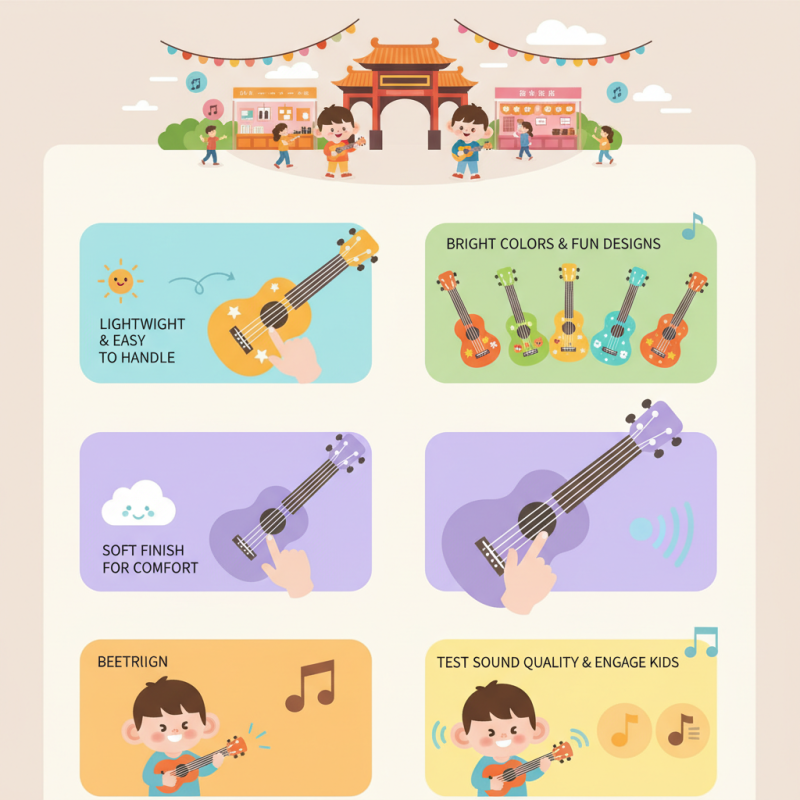
Selecting the perfect ukulele requires careful consideration. Look for models that are lightweight and easy to handle. Bright colors and fun designs can capture a child’s interest. Additionally, ensure the ukulele has a soft finish to promote comfort during play.
However, not all ukuleles are created equal. Some may lack the sound quality you desire. It is important to test different brands before making a purchase. Listening closely can help you notice distinct tones. Each child has different preferences. Engaging them in the selection process can lead to better choices. Choose wisely and make music an enjoyable part of their lives.
Choosing a ukulele for kids involves several critical factors. One key consideration is the size of the instrument. Ukuleles come in various sizes: soprano, concert, tenor, and baritone. The soprano is often recommended for young beginners due to its smaller scale. Research indicates that children aged 5 to 7 often find it easier to handle. As they grow, they may prefer larger sizes for better tone and comfort.
Another important aspect is the material. Ukuleles made from mahogany or koa wood often provide richer sound quality. However, beginners may opt for laminate versions for durability. According to a recent report by the National Association of Music Merchants, 55% of parents prioritize sound quality when purchasing instruments for their children. It's worth noting that not all affordable options compromise on sound; some laminate ukuleles perform surprisingly well.
Lastly, consider the design and color. Children are motivated by visually appealing items. Bright colors and fun designs can increase their interest in playing. However, avoid overly flashy designs that might distract from learning. The right choice should balance aesthetics with functionality, guiding kids on their musical journey without overwhelming them.
When choosing a ukulele for kids, size matters. Kids often struggle with larger instruments. A smaller ukulele is easier for little hands to hold. The most common sizes are soprano, concert, and tenor. Soprano ukuleles are the smallest, perfect for young beginners. Their light weight and bright tone appeal to children.
Concert ukuleles are slightly larger. They provide a fuller sound yet remain manageable. This size can suit older kids well. The tenor ukulele is bigger, offering depth and richness. However, it might be challenging for younger children. Consider your child's age and comfort.
**Tips:** Try different sizes before buying. Let the child hold and strum each one. This experience is vital. Also, watch for the string tension. High tension can make it hard to play. Lastly, have patience. If your child struggles, it is okay. Keep practice light and fun!
| Ukulele Size | Suitable Age | Body Length (inches) | Recommended String Type | Sound Quality |
|---|---|---|---|---|
| Soprano | 5-8 years | 21 | Nylon | Bright and clear |
| Concert | 8-12 years | 23 | Nylon or Fluorocarbon | Warm and balanced |
| Tenor | 12+ years | 26 | Nylon or Steel | Rich and full |
| Baritone | 12+ years | 30 | Nylon or Steel | Deep and resonant |
Choosing a ukulele for kids can be challenging. One of the most important factors is the material. The body of the ukulele can be made from various woods or synthetic materials. Each type affects sound and durability. For younger children, a robust option might be best. A laminate wood or plastic body can withstand rough handling.
Sound quality is crucial, too. Solid wood ukuleles provide a rich tone. However, they are often pricier and may not be suitable for all kids. Keep in mind that acoustics matter. A well-made ukulele with quality materials will inspire your child to play more. Flimsy designs can discourage budding musicians.
Look for lightweight options. A heavy ukulele can be hard for small hands. Check the size as well. Soprano is the smallest and often recommended for young learners. The fit should be comfortable. Kids should be able to hold it easily.
Sometimes, kids find a certain color or design appealing. It’s a valid consideration. While sound is vital, aesthetics can spark interest too.
When choosing a ukulele for kids, budgeting is key. Quality instruments can range significantly in price. Generally, you can find decent beginner ukuleles from around $30 to $100. This mid-range often provides the best value for young learners. Opting for something too cheap may lead to disappointments. A flimsy instrument can kill enthusiasm.
Pay attention to the materials used. Solid wood ukuleles tend to sound better. However, they can be pricier. Many options use laminate, which can still work well for children. Consider the size too. Soprano ukuleles are smaller and great for little hands. Concert ukuleles offer a richer sound but may be a stretch for very young kids.
It’s important to involve your child in the selection process. They should feel a connection to the instrument. Encourage them to play different models. What fits comfortably? What sounds good? Don't rush this. Sometimes, a slightly higher budget can lead to a lasting interest. Ultimately, finding balance between quality and affordability is essential. This journey can be valuable, not just for music, but for learning about responsibility and investment.
When choosing a ukulele for your child at the 139th Canton Fair, testing is key. Kids need an instrument that feels good and sounds great. Look for a ukulele that fits comfortably in their hands. The size is important. A soprano size is often best for younger players, while a concert or tenor might suit older kids.
Listen closely during the testing. The sound quality varies from one ukulele to another. Strumming gently can reveal the instrument's tone. Does it sound bright and cheerful? Or dull and flat? A good ukulele should resonate well. It's a sign of quality craftsmanship.
Encourage your child to play different ukuleles. Their comfort matters more than anything. Ask them how it feels. If they don't like the weight or shape, they might not play it often. Sometimes, a model looks great but doesn’t inspire joy.
The right choice can ignite a lifelong passion for music. Yet, not every ukulele will hit the mark on the first try. Take your time, and trust your instincts as you explore.
: Look for laminate wood or plastic. They are durable and can handle rough use.
Better sound quality inspires kids to play more. Flimsy options can discourage them.
Soprano ukuleles are the smallest and often a good fit for young learners.
Beginner ukuleles typically range from $30 to $100. Quality instruments might inspire interest.
Yes, it's important. Let them try different models to find one that feels right.
Absolutely! Aesthetic appeal can spark interest alongside sound quality.
A flimsy instrument might lead to disappointment. It can kill your child's enthusiasm.
A lightweight ukulele is easier for small hands to handle. Heavy options can be challenging.
A well-made ukulele produces better sound. Poor acoustics can hinder the learning experience.
It teaches responsibility and investment in quality. The journey is as valuable as the music.
Choosing the right ukulele for kids involves several important factors to ensure a positive musical experience. It's crucial to consider different ukulele sizes that are suitable for children's hands, as well as the materials used in construction. Lightweight and durable options tend to work best for younger players. Budgeting is another significant aspect; knowing the price ranges and making informed recommendations can help parents invest in a quality ukulele for kids without overspending.
Additionally, testing ukuleles is vital to finding the perfect fit for your child. Encourage children to try different styles and sizes to see what feels comfortable and sounds good to them. By taking these factors into account, parents can select a ukulele for kids that not only inspires a love for music but also supports their learning journey effectively.
