GEEGO Toys
Storing kids’ educational toys can be a challenge for many parents. It’s essential to find a balance between accessibility and organization. Too often, toys end up scattered across the house, leading to frustration and chaos. Learning how to store kids’ educational toys easily is crucial for maintaining an organized space while encouraging learning and creativity.
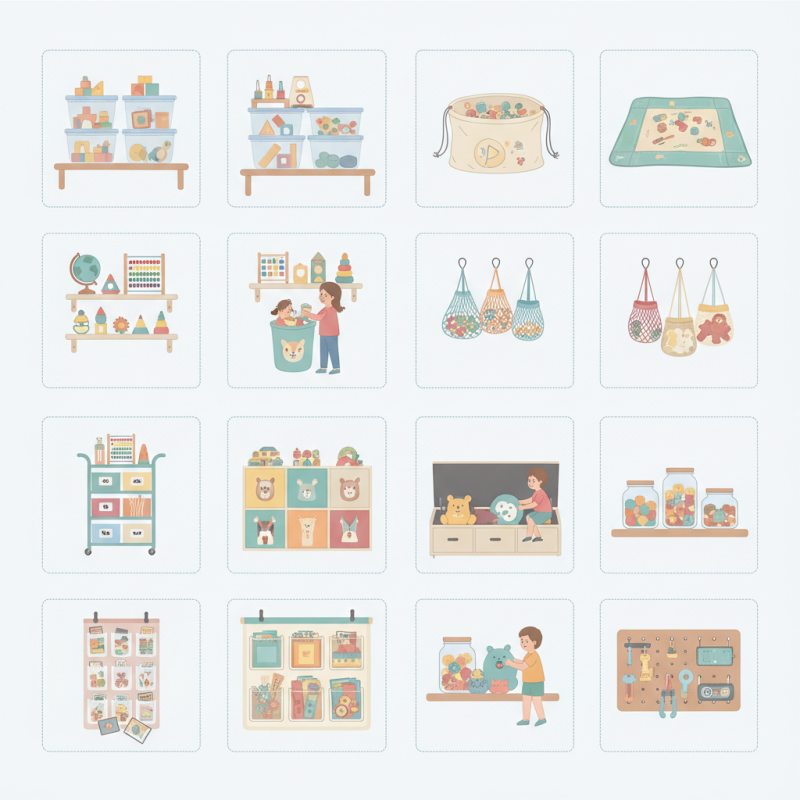
There are various methods to achieve effective storage solutions. For instance, consider using clear bins to categorize toys by type. This allows children to see their options easily. Alternatively, wall-mounted shelves can save floor space while displaying toys attractively. However, despite these strategies, parents sometimes find it tough to implement a consistent routine. Reflecting on what works and what doesn’t is crucial.
Moreover, involving kids in the process can create a sense of responsibility. Teach them how to tidy up after playtime. While it may not always be perfect, cooperation can lead to a more organized environment. Ultimately, finding the right system for your family takes time and patience. Embrace this journey and adjust as needed.
Organized educational toy storage plays a crucial role in a child's development. Studies reveal that children with well-organized play spaces show increased focus and creativity. In addition, a clutter-free environment reduces stress for parents and children alike. The average child interacts with about 70 toys, and keeping these accessible yet organized enhances playtime effectiveness.
Research from the American Journal of Pediatrics highlights that important developmental skills are nurtured through play. Disorganized toys can lead to distractions. Children may spend valuable playtime searching instead of learning. Effective storage solutions can transform chaos into creativity. For instance, using clear bins allows children to see their options. This can encourage independent play and decision-making.
Despite the clear benefits, many families struggle with toy management. A survey indicated that 55% of parents feel overwhelmed by toy clutter. Reflection on storage strategies may yield a more harmonious space. Prioritizing organization not only supports a child's education but also nurtures a positive atmosphere at home. A systematic approach to toy storage can instill responsibility and promote engagement in their learning journey.
Decluttering kids' toys can greatly impact their cognitive development.
When children are surrounded by too many items, it can create sensory overload.
This makes it harder for them to focus and engage in meaningful play.
When you reduce the number of toys, children must choose which ones to play with, encouraging deeper engagement and creativity.
Having fewer toys also helps children learn to make decisions.
They can practice sorting, categorizing, and prioritizing their playthings.
For instance, you might notice your child spending more time building with blocks rather than being distracted by other toys.
A tidy environment fosters a sense of calm, allowing kids to explore and learn effectively.
On the other hand, it’s easy to feel guilty about tossing out toys.
Parents often hold onto items due to emotional ties or guilt over the cost.
Reflecting on your child's interests can help ease this process.
Focus on the educational benefits rather than the quantity of toys.
Encourage your child to participate in the decluttering process, allowing them to express their feelings and preferences.
This can also be a good opportunity for discussions on sharing and letting go.
Finding innovative storage solutions for kids' educational toys can significantly enhance organization and play. A recent survey from the American Academy of Pediatrics found that clutter can negatively impact children's focus and learning. Thus, smart storage options are essential for any household with young learners.
Consider open shelving. It encourages kids to access their toys easily. Using colorful bins can bring fun into the room while aiding organization. A report from the National Retail Federation indicates that 62% of parents prefer bins that promote learning and creativity. Wall-mounted organizers are another fantastic option. They use space efficiently and keep educational tools visible. Yet, not all solutions are one-size-fits-all. Some families may find these methods ineffective if not tailored to their children's preferences.
For a tactile experience, using a play mat that doubles as storage can enhance engagement. Research shows that tactile learning activities improve information retention by 75%. However, parents often struggle with keeping these areas tidy. Reflecting on your methods can provide insights. Assess what works or doesn't with your child's habits. Adapting storage strategies is a continuous journey. It requires willingness to rethink what best serves your family dynamics.
Maximizing space in your home is essential, especially when it comes to kids' educational toys. Vertical storage options are not only space-saving but also visually appealing. Using wall-mounted shelves or pegboards can transform bare walls into functional storage areas. Children can easily access their toys, and it encourages them to clean up after playtime.
Consider using clear bins stacked vertically. This method maximizes space while allowing for easy viewing of toys. Label each bin to enhance organization. Labels help kids understand where everything belongs. If vertical space is limited, try hanging organizers on the back of doors. This approach can hold a variety of items, from puzzles to smaller toys.
It’s normal to feel overwhelmed when organizing. Some toys might not fit neatly, and that’s okay. Be open to reassessing your storage methods periodically. As kids grow, their toy collection changes, and so should your approach to storage. Simple adjustments can lead to a more organized space, boosting both functionality and creativity.
| Storage Option | Description | Advantages | Best For |
|---|---|---|---|
| Wall Shelves | Floating shelves mounted on walls for toy display and storage. | Saves floor space, easy access, decorative. | Books and smaller toys. |
| Over-the-Door Organizers | Utilizes the back of doors for hanging storage. | Maximizes space, versatile, easy to install. | Art supplies, small toys. |
| Vertical Toy Racks | Standalone racks designed to hold multiple toys vertically. | Organized, easy for kids to use. | Larger toys, stuffed animals. |
| Bins with Labels | Clearly labeled bins for sorting different types of toys. | Promotes organization, encourages kids to clean up. | All toy categories. |
| Pegboards | Wall-mounted boards with hooks for hanging toys. | Customizable, versatile, decorative. | Craft supplies, smaller toys. |
| Storage Carts | Rolling carts with multiple tiers for easy mobility. | Mobile, can be used in multiple rooms. | Crafts, small toys, games. |
| Corner Shelves | Shelves that fit into corners, maximizing unused space. | Saves space, functional. | Books, decorative items. |
| Storage Drawers | Stackable drawers for hiding toys and maintaining neatness. | Keeps toys tidy, easy access. | All toy categories. |
| Hanging Baskets | Baskets that can be suspended from the ceiling or wall. | Adds visual interest, saves floor space. | Soft toys, light items. |
Storing kids' educational toys can be a challenge for many parents. Utilizing clear bins is an effective solution. According to a study by the American Academy of Pediatrics, children thrive in organized environments. Clear bins allow kids to access their toys independently. This promotes both creativity and decision-making skills.
Visibility is key. When toys are within sight, children are more likely to engage with them. Research shows that organized play spaces can increase a child's focus and reduce frustration. Clear bins make it easy for kids to identify their favorite toys quickly. This accessibility can lead to longer playtime sessions.
However, maintaining an organized system can be tricky. Parents often struggle to keep bins sorted by type or age group. Regularly checking the contents of each bin can help. Toys should be added or removed based on their usage. Reflecting on the organization method can lead to better solutions. Reassessing strategies can improve the overall experience for both parents and children.
: It enhances focus and creativity, nurturing crucial developmental skills through play.
Disorganized toys lead to distractions, causing children to waste time searching instead of playing.
Clear bins are effective as they allow children to see and access toys easily.
When toys are visible, children are more likely to play with them, increasing playtime.
Yes, many parents feel overwhelmed, with 55% struggling to manage toy clutter.
Regularly check and sort bins by type or age group to keep toys organized.
Yes, reflecting on and reassessing strategies can improve organization and overall experiences.
It reduces stress for both children and parents, promoting a positive atmosphere at home.
Storing kids’ educational toys effectively is essential for fostering a conducive learning environment. An organized space not only promotes cognitive development but also encourages children to engage with their toys more meaningfully. Understanding the importance of educational toy storage can lead to significant benefits, such as improved focus and creativity.
To answer the question of how to store kids’ educational toys easily, consider adopting innovative storage solutions that maximize space, such as vertical storage options. Utilizing clear bins can enhance visibility and accessibility, making it simpler for children to find and put away their toys. By implementing these strategies, families can create a more organized and stimulating play area that supports children's growth and learning.
