Montessori toys play a pivotal role in child development. Experts emphasize their importance in fostering essential skills. According to the American Academy of Pediatrics, play is vital for cognitive and social growth. These toys encourage creativity and problem-solving in a child's formative years.
Dr. Maria Montessori, a pioneer in educational theory, emphasized, “Play is the work of the child.” This statement highlights why Montessori toys are good for development. They are specifically designed to promote independent learning. Through hands-on experiences, children explore their environment and develop fine motor skills.
Research indicates that children who engage with Montessori materials often show advanced levels of cognitive skills. A study from the University of Virginia found that children using Montessori toys scored significantly higher in math and reading assessments. However, the accessibility and adaptation of these toys remain challenges for many families. Addressing these gaps is crucial for improving developmental opportunities for all children.
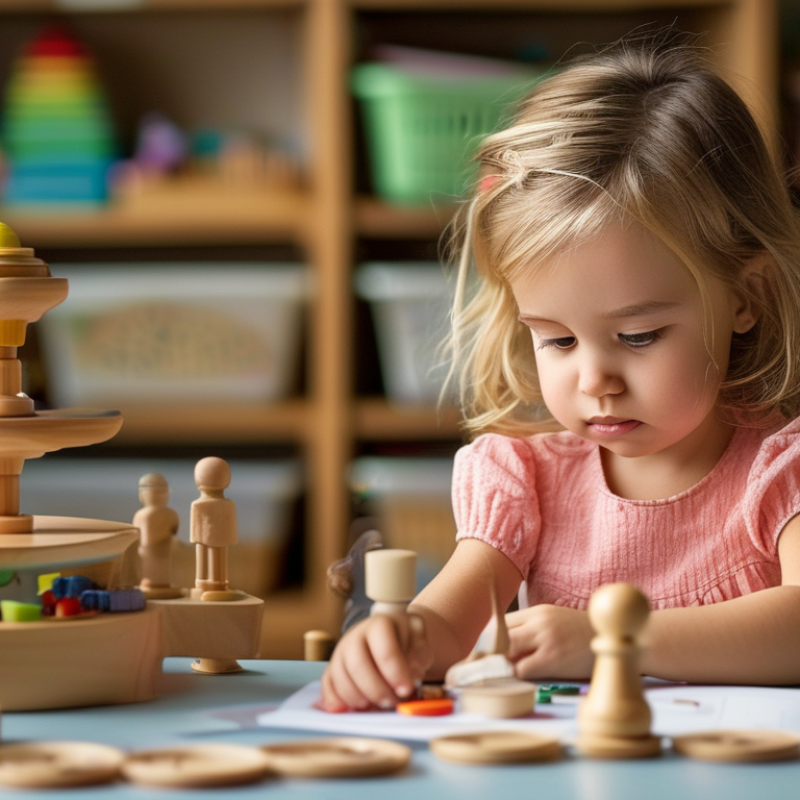
The Importance of Montessori Toys in Early Childhood Development
Montessori toys play a crucial role in early childhood development. These toys are designed to foster independence and encourage exploration. They are often made from natural materials, promoting sensory experiences. Children engage in open-ended play, which stimulates creativity and problem-solving skills. For instance, a simple wooden block set can teach balance and coordination while children experiment with different structures.
The design of Montessori toys emphasizes hands-on learning. Children gain confidence as they master various skills. For example, puzzles help with fine motor development and spatial awareness. Parents and educators notice that these activities engage children for extended periods. This focus on intrinsic motivation is vital in a child's growth.
While Montessori toys are beneficial, their effectiveness may vary. Some children might not connect with particular toys immediately. This can lead to frustration, and parents should be patient. Observing how a child interacts with toys allows for better choices. Ultimately, the goal is to support children's natural curiosity and drive. Montessori toys provide meaningful avenues for exploration, laying the foundation for lifelong learning.
Promoting Motor Skills Through Montessori Play
Montessori toys play a crucial role in promoting motor skills in children. These toys often focus on hands-on activities that require active participation. For instance, a wooden block set encourages children to stack and balance, engaging their fine motor skills. As they play, kids learn to grip, twist, and manipulate objects, helping improve their dexterity and hand-eye coordination.
Through varied textures and shapes, Montessori toys stimulate sensory exploration. For example, a set of colorful beads can capture a child's attention. When children thread these beads onto a string, they enhance their pincer grip and concentration. Unstructured playtime, filled with Montessori materials, permits children to explore at their own pace. It allows them to experiment, make mistakes, and reflect on their actions.
This method of learning can reveal potential areas for improvement. Some children may struggle initially with coordination or focus. Such challenges are crucial for their growth. They prompt further practice and adjustment, as each child develops uniquely. Encouraging independence is vital. The experience of overcoming obstacles fosters resilience, shaping children into confident learners.
Fostering Independence and Confidence with Montessori Toys
Montessori toys are designed to promote learning through play. They foster independence and build confidence in young children. These toys encourage exploration and self-initiated activity, allowing children to learn at their own pace. When children engage with Montessori toys, they develop problem-solving skills and critical thinking.
A great tip for parents is to provide an inviting space for play. Create a dedicated area filled with a variety of Montessori toys. Ensure the space is safe and accessible. This setup encourages children to choose the activities they want to engage with, enhancing their decision-making skills.
Another tip is to allow for mistakes. Children learn best when they explore and find solutions independently. Instead of swooping in to help, give them time to troubleshoot. If they struggle, gently guide them without taking over. This promotes resilience and boosts their confidence in their abilities.
Encouraging Cognitive Development through Hands-on Learning
Montessori toys promote cognitive development through hands-on learning. These toys engage children in active exploration, sparking their curiosity. They encourage problem-solving skills as children navigate challenges. When children engage with these toys, they learn through trial and error. This process can lead to frustration, but it also builds resilience.
Tactile experiences enhance sensory development. For instance, a puzzle may require children to manipulate pieces with their fingers. This strengthens fine motor skills while promoting spatial awareness. Engaging in play can also lead to unexpected outcomes. Children might not complete a task immediately, which offers opportunities for reflection and improvement.
Social interaction is another key benefit. When children play together using Montessori toys, they practice communication skills. Sharing materials and ideas helps them understand cooperation. It is not always smooth, and disagreements may arise. This conflict resolution contributes to their social and emotional growth. Ultimately, hands-on learning fosters independence and critical thinking. It prepares children for future challenges in a dynamic world.
7 Reasons Montessori Toys Are Essential for Child Development
| Reason |
Description |
Developmental Benefit |
Example Toy |
| Promotes Independence |
Allows children to explore and learn at their own pace. |
Fosters self-reliance and confidence. |
Stacking Blocks |
| Enhances Motor Skills |
Engaging with toys helps refine fine motor skills. |
Improves hand-eye coordination. |
Lacing Beads |
| Encourages Cognitive Growth |
Challenges children to think critically and solve problems. |
Boosts problem-solving abilities. |
Puzzle Games |
| Fosters Creativity |
Open-ended toys allow children to create and explore. |
Stimulates imagination and innovation. |
Art Supplies |
| Encourages Social Skills |
Group play fosters interaction and teamwork. |
Develops communication skills. |
Cooperative Games |
| Builds Concentration |
Engaging tasks help children focus for longer periods. |
Enhances attention span. |
Sorting Sets |
| Strengthens Language Skills |
Toys that involve storytelling enhance vocabulary. |
Promotes language development. |
Storytelling Cards |
Supporting Social Skills and Emotional Growth in Playful Environments
Montessori toys foster social skills and emotional growth in children. These toys encourage cooperative play, allowing kids to interact and communicate. When children engage in group play with these toys, they learn to share and negotiate. They experience both victories and failures, which helps them manage their emotions.
In a Montessori setting, the environment promotes hands-on exploration. Children grasp concepts through play, not just through rigid instruction. This approach nurtures independent thinking but also teamwork. For example, building blocks can inspire kids to collaborate on structures together. They navigate challenges, which fosters resilience and empathy. Such experiences are vital for developing social-emotional skills.
Children may struggle with sharing and patience initially. It's not always easy for them to wait their turn. However, through play, they gradually learn the importance of these skills. The mistakes and setbacks in play offer valuable lessons. They prompt reflection and growth. Montessori toys provide a safe space for this type of meaningful learning.
7 Reasons Montessori Toys Are Essential for Child Development
FAQS
: Montessori toys engage children in hands-on activities, improving fine motor skills through gripping and manipulating objects.
Unstructured play with Montessori materials allows children to explore at their own pace and learn from mistakes.
Different textures stimulate sensory exploration, helping to develop a child’s focus and dexterity during play.
Allowing children to make choices fosters resilience and shapes them into confident, self-directed learners.
Create a safe, inviting area filled with diverse Montessori toys to encourage exploration and decision-making.
Instead of jumping in, give children time to solve problems. Offer gentle guidance, promoting their confidence and resilience.
Yes, mistakes provide opportunities for children to reflect and grow, enhancing their problem-solving skills and self-esteem.
Children build critical thinking, problem-solving skills, and confidence through independent exploration and play.
Provide diverse toys, a safe play area, and encourage exploration while allowing children to make their own discoveries.
Some children may initially struggle with coordination or focus, but these challenges can lead to significant growth and improvement.
Conclusion
Montessori toys play a crucial role in early childhood development by aligning with the natural learning processes of children. These toys are designed to promote motor skills through engaging play that requires precision and coordination. Additionally, they foster independence and confidence, allowing children to explore and learn at their own pace. The hands-on learning experiences offered by Montessori toys also encourage cognitive development, as children interact with their environment and discover cause-and-effect relationships.
Moreover, Montessori toys support social skills and emotional growth by providing opportunities for cooperative play in a nurturing environment. By asking the question, "Why are Montessori toys good for development?" we can see that they not only enhance physical and cognitive abilities but also contribute to building a child's self-esteem and interpersonal skills. Overall, integrating Montessori toys into playtime can significantly enrich a child's developmental experience.
 GEEGO Toys
