In today's fast-paced world, choosing the right toys for children has become a significant challenge for parents. The market is filled with various options, but what skills do educational toys improve? Understanding this can guide you in making informed decisions.
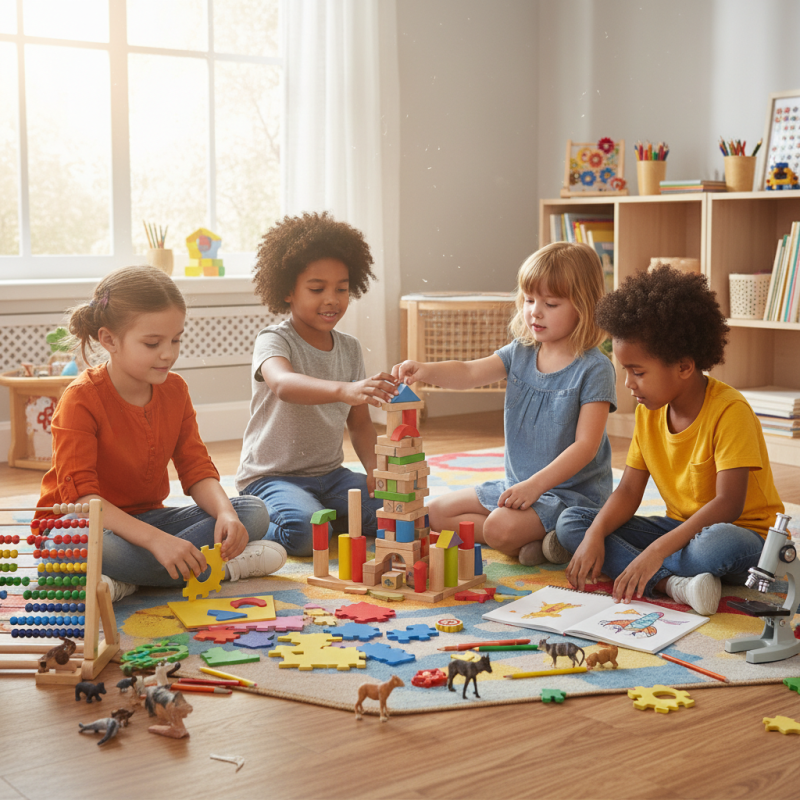
Educational toys are not just about fun. They can foster essential skills like problem-solving, critical thinking, and fine motor development. For example, building blocks encourage creativity while enhancing spatial awareness. Such toys often promote teamwork, as children learn to collaborate during playtime.
Yet, some educational toys may lack depth, focusing solely on entertainment rather than skill development. It's crucial to select toys that strike a balance between enjoyment and educational value. Parents should focus on toys that offer real learning experiences, helping their kids thrive in various areas.
Key Benefits of Educational Toys for Child Development
Educational toys play a crucial role in child development. They support key skills like problem-solving, critical thinking, and creativity. According to a report by the National Association for the Education of Young Children, engaging with educational toys enhances a child's cognitive skills by up to 40%. This boost can be vital for early learners.
These toys can also improve social skills. When kids play with others, they learn sharing and teamwork. The American Academy of Pediatrics suggests that playtime is essential for emotional growth. Through play, children develop empathy and communication skills. Encouraging shared playtime can greatly benefit their interpersonal skills.
Tips for parents: Choose toys that promote engagement. Look for options that challenge your child without causing frustration. Rotate toys periodically to keep their interest alive. Watching your child struggle with a complex toy can be a sign of growth. Encourage them to keep trying. Embrace these challenges, as they are a natural part of the learning process.
Types of Skills Enhanced by Educational Toys
Educational toys play a significant role in developing essential skills for children. These toys can enhance cognitive, motor, and social skills, laying a solid foundation for future learning. According to the American Academy of Pediatrics, play is vital for brain development. Engaging with educational toys fosters critical thinking and problem-solving abilities.
One of the key areas affected by these toys is cognitive development. Puzzles and building sets, for example, promote spatial awareness and logical reasoning. A recent study indicated that children who regularly engage with such toys score 20% higher in cognitive tasks compared to those who do not. This difference underscores the importance of integrating educational toys into playtime.
Motor skills are another crucial area enhanced by educational toys. Toys that involve stacking, sorting, or manipulating objects improve fine motor skills. Children learn hand-eye coordination and develop dexterity, which are crucial for later skills such as writing. A University of Michigan study revealed that children exposed to motor skill-enhancing toys demonstrated an improvement of 15% in coordination tasks.
Tip: Choose toys that challenge children without overwhelming them. Look for options that can be used in various ways as children grow. Remember, the goal is to encourage exploration and learning through play.
Criteria for Selecting the Right Educational Toy
When selecting the right educational toy for children, consider several key criteria. The toy should be age-appropriate. Toys that align with a child’s developmental stage are more engaging. A toy meant for older children might frustrate a younger child. This mismatch can hinder learning rather than foster it.
Look for toys that promote multiple skills. A well-designed toy should encourage creativity and critical thinking. It should also enhance motor skills. For instance, building blocks can stimulate spatial awareness and hand-eye coordination. Beyond skill development, consider the durability of the toy. A reliable toy withstands the wear and tear of active play.
Be mindful of safety. Toys should be made from non-toxic materials. Parents often overlook this factor. It's crucial to assess whether a toy has small parts that could pose choking hazards. Additionally, ensure that the toy is easy to clean. A toy that’s difficult to maintain can lose its appeal quickly. Each of these considerations contributes to a toy’s overall value in supporting a child's growth and learning.
Top Educational Toys Recommended for Different Age Groups
When selecting educational toys for children, age appropriateness is crucial. A report by the American Academy of Pediatrics emphasizes that toys should align with developmental stages. For infants, sensory toys that promote tactile exploration are essential. These types of toys can enhance fine motor skills and stimulate cognitive development.
As toddlers begin to engage in imaginative play, building sets and role-play toys can significantly improve creativity and social skills. Research suggests that approximately 80% of brain development occurs before age three. Providing stimulating toys during this period is vital for cognitive growth.
For older children, STEM-oriented toys play a transformative role in learning. Studies highlight that kids who engage with these toys show improved problem-solving abilities. This engagement fosters an interest in science and mathematics. However, parents should monitor playtime to ensure it's constructive rather than overwhelming. Balancing play and screen time remains a challenge in many households.
Effective Usage of Educational Toys to Maximize Learning
Educational toys can significantly enhance your child's learning experience. Choosing the right toy is crucial. Focus on those that promote problem-solving, creativity, and critical thinking. For example, puzzles can sharpen cognitive skills. Building blocks encourage spatial awareness and fine motor skills.
To maximize the learning potential of these toys, engage with your child during play. Ask questions that stimulate thinking and discussion. Share your experiences related to the concepts being explored. This interaction fosters a deeper understanding. Sometimes, kids may lose interest quickly. It's important to be patient and mix in various activities to keep them engaged.
Always observe how your child interacts with each toy. Some may prefer tactile experiences, while others thrive in imaginative play. Adjust your approach based on their responses. Embrace the journey, even when progress seems slow. Each play session is a learning opportunity, highlighting the importance of adaptability in teaching.
FAQS
: Educational toys enhance problem-solving skills, critical thinking, and creativity in children. They boost cognitive skills significantly.
Playing with educational toys promotes sharing, teamwork, and emotional growth, fostering communication and empathy among children.
Parents should look for age-appropriate toys that challenge children without causing frustration. This promotes engagement and learning.
Rotating toys keeps children's interest alive and encourages them to explore new skills through different play experiences.
If a child struggles with a complex toy, it can indicate growth. Encouragement during these challenges is essential.
Choose toys that promote multiple skills, are durable, safe, and easy to clean. These factors ensure lasting engagement and safety.
Check if toys are made from non-toxic materials and have no small parts. Safety is crucial for preventing potential hazards.
Not all toys foster development. Focus on those that align with the child's developmental stage to enhance learning and growth.
Playtime is vital for emotional growth. It allows children to develop important social and interpersonal skills through interaction.
Yes, choosing toys that are too advanced can frustrate children, hindering their learning. Reflection on selections is key for improvement.
Conclusion
Educational toys play a crucial role in child development by enhancing a variety of essential skills. The key benefits of these toys include promoting cognitive abilities, improving fine motor skills, and encouraging social interactions. When parents wonder, "What skills do educational toys improve?" they should consider the specific abilities targeted by different types of toys, such as creativity, problem-solving, and emotional intelligence.
To select the right educational toy, it's essential to understand the child's age and developmental stage, ensuring that the toy aligns with their interests and abilities. Effective usage of educational toys can further maximize learning outcomes by integrating them into daily activities and encouraging children to explore and engage actively. By focusing on these aspects, caregivers can support their child's growth through meaningful play.
 GEEGO Toys