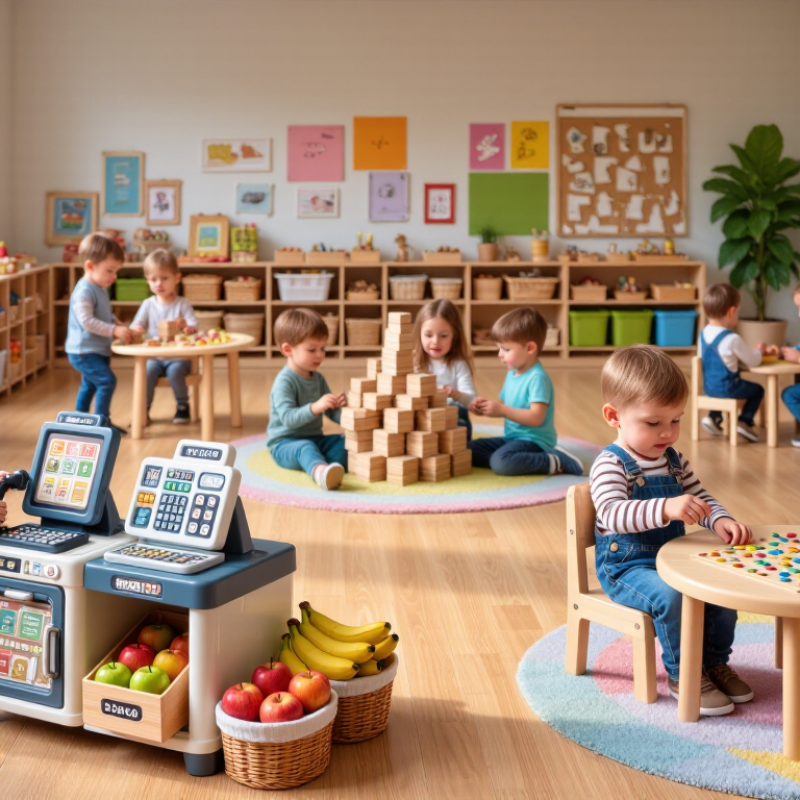
Why do kids learn faster through play? The answer begins with how children naturally explore the world. During a pretend grocery shop, a child counts toy apples, negotiates roles, and learns new words. These actions combine movement, language, problem-solving, and social practice.
Research supports this everyday observation. UNICEF’s 2018 Learning through Play report describes play as essential for cognitive, physical, social, and emotional development. The American Academy of Pediatrics also explains that play strengthens executive functions, including attention, working memory, and self-control. A review published by the LEGO Foundation and researchers from the University of Cambridge identifies five learning characteristics: joy, engagement, iteration, meaningfulness, and social interaction. These findings help explain why playful learning can feel easier and remain memorable.
Still, play is not a magic shortcut. Some activities become noisy without a clear purpose. Others exclude quiet children or make rules too complicated. Adults must watch closely, adjust the challenge, and leave space for children’s ideas. That judgment matters. A four-year-old sorting buttons may need gentle questions, not a lecture. A frustrated child may need fewer pieces and more time. The seven tips in this guide connect research with practical moments at home and school. They focus on purposeful play, emotional safety, and achievable challenges. The evidence is promising, but reflection remains necessary. Children do not learn in identical ways. Good play leaves room for surprise.
How Play Supports Children’s Natural Learning Processes
Why Do Kids Learn Faster Through Play 7 Tips?
How Play Supports Children’s Natural Learning Processes
Play works because it begins with a child’s curiosity, not an adult’s timetable. In a classroom, a child may ignore a worksheet but spend twenty minutes building a bridge from wooden blocks. The bridge falls. The child studies the pieces, changes the base, and tries again. That small cycle develops planning, language, memory, and flexible thinking.
Follow the child’s interest instead of controlling every step. Offer open-ended materials, such as blocks, paper, water, or safe household objects. Ask questions like, “What could make it stronger?” Describe actions with clear words. Let children repeat games, because repetition helps skills become secure. Add a gentle challenge when the task feels too easy. Invite another child to join, so play can practice listening, sharing, and negotiation. Protect quiet, child-led play each day.
Adults also need to watch carefully. A child who abandons a puzzle may need encouragement, or the puzzle may simply be too difficult. I have sometimes mistaken silence for concentration. That was not always accurate. Children need room to struggle, but not endless frustration. Calm guidance can help them name feelings, test ideas, and continue. Learning through play is not effortless. It is active, meaningful, and sometimes wonderfully messy.
How Play Builds Attention, Memory, and Problem-Solving Skills
Play is not a break from learning. It is a small laboratory for attention, memory, and problem-solving. When a child searches for a hidden toy, attention stays active because the goal feels personal. Retelling a pretend story strengthens memory. Sorting buttons by color or size helps children notice patterns. Building a tower, watching it fall, and rebuilding it creates practical reasoning.
A 2020 report from Harvard’s Center on the Developing Child states that more than one million neural connections form each second during early childhood. Play gives those connections useful work.
The World Health Organization recommends at least 180 minutes of daily movement for children aged three to four, including 60 minutes of moderate activity.
Try seven simple moves:
hide objects
ask “What might happen?”
retell stories
change one rule
build with loose materials
pause before helping
invite another solution
Keep it playful. Mistakes matter.
I sometimes ask too many questions while children play. That can turn discovery into a test. The American Academy of Pediatrics explains that child-led play supports executive function, language, and social development. So, wait longer. Watch the small choices. A child who quietly changes a bridge design may be solving a harder problem than an adult expects.
My own observations are not perfect, and every child responds differently. That uncertainty deserves attention, not quick correction.
Seven Practical Ways to Turn Everyday Play into Learning
Why Do Kids Learn Faster Through Play?
Seven Practical Ways to Turn Everyday Play into Learning
Children often learn quickly through play because they test ideas without fearing every mistake. During pretend cooking, a child counts plates, names ingredients, and practices conversation. These moments build language, memory, problem-solving, and confidence together. Child-development research also suggests that active, enjoyable learning can improve attention. Still, play is not a magic shortcut. Some children need more time, guidance, or repetition.
Tip 1: Add counting to everyday play. Count blocks, steps, or toy animals. Tip 2: Ask open questions, such as “What could happen next?” Tip 3: Turn drawing into storytelling. Let the child explain each picture. Tip 4: Use water play to explore full, empty, heavy, and light. Tip 5: Cook together and measure simple ingredients. Tip 6: Build a small obstacle course for movement and planning. Tip 7: Let children change the rules sometimes. Their unusual ideas may reveal deeper thinking.
Adults should observe before correcting. A child stacking uneven blocks may be exploring balance, not failing. I have found that joining too quickly can interrupt concentration. Quiet support often works better. Try saying, “Tell me about your plan,” instead of giving an answer. Keep play safe, flexible, and suited to the child’s age. Some activities may seem educational but feel forced. That is worth noticing. When interest disappears, pause, simplify, or try again another day.
Why Do Kids Learn Faster Through Play?
Seven practical ways to turn everyday play into meaningful learning
Play combines active participation, repetition, feedback, imagination, and social interaction. These seven evidence-informed learning pathways show why simple play activities can help children build skills more naturally than passive instruction.
How Adults Can Guide Play Without Limiting Creativity
Why Do Kids Learn Faster Through Play? 7 Tips
Play gives children a safe place to test ideas, change plans, and try again. Adults guide this process best by shaping the environment, not controlling every move. The UNICEF report A World Ready to Learn estimated that 175 million children lacked pre-primary education in 2019. Playful learning can make everyday experiences more accessible. The World Health Organization recommends at least 180 minutes of physical activity daily for children aged three to four. Movement matters too.
Tip: Watch before speaking. Notice whether a child is building, pretending, or solving a problem. Tip: Ask open questions. Try, “What could happen next?” Avoid questions with one correct answer. Tip: Offer simple materials. Cardboard, stones, fabric, and water can become almost anything. Too many toys may quietly reduce invention.
Tip: Set gentle boundaries. Keep materials safe, but allow manageable mess. Tip: Extend the idea, not the outcome. Add a flashlight to a shadow game, then step back. Tip: Accept repetition. Repeating a tower collapse may develop persistence, not waste time. Tip: Reflect afterward. Ask what the child discovered, rather than what they produced. The American Academy of Pediatrics states that play supports language, executive function, and self-regulation. Still, adults often interrupt too quickly. I do too, sometimes. A useful correction is simple: pause for ten seconds before offering help. That pause may feel unproductive, but it leaves room for the child’s own theory.
Choosing Safe, Engaging, and Age-Appropriate Learning Activities
Why Do Kids Learn Faster Through Play? 7 Tips
Choosing Safe, Engaging, and Age-Appropriate Learning Activities
Play gives children a reason to explore, repeat, and remember. When a child builds a tower, they test balance, count blocks, and solve small problems. The learning feels natural because curiosity leads the activity. In my experience, children stay focused longer when they can touch, move, and make choices. However, not every playful activity is suitable. A noisy game may excite one child and overwhelm another. Watch closely.
Tips: Choose materials without sharp edges or loose parts for younger children. Check age guidance carefully. Match activities with the child’s language, motor skills, and attention span. Offer simple choices, such as drawing, sorting buttons, or acting out a story. Use clean, durable materials. Supervise water, climbing, and small-object activities. Let children change the rules safely. Keep it simple.
Engagement grows when adults join without taking control. Ask, “What might happen next?” rather than giving every answer. Praise effort, patience, and creative thinking. A five-minute game can be valuable if the child remains interested. I sometimes expect an activity to work perfectly, but children may ignore it completely. That reaction is useful information. Perhaps the task is too difficult, too easy, or simply wrong for that moment. Adjust the materials, reduce instructions, and try again later. Safe play should leave room for discovery, movement, and occasional mistakes.
FAQS
Play begins with curiosity instead of an adult’s schedule. A child may ignore a worksheet but build with blocks for twenty minutes. When the tower falls, the child studies the pieces and tries again. That cycle develops planning, memory, language, and flexible thinking.
Watch before speaking. Notice whether the child is building, pretending, or solving a problem. Offer materials linked to the child’s focus, such as cardboard, water, fabric, or stones. Do not control every move.
Ask open questions without one correct answer. Try, “What could make the bridge stronger?” or “What might happen next?” These questions invite children to test ideas. Short prompts work best.
Yes, within safe limits. A child may need time to solve a puzzle or rebuild a fallen tower. Endless frustration is different. Offer calm guidance when the child becomes overwhelmed, but pause before helping.
Repetition helps skills become secure. A child who repeatedly knocks down a tower may be practicing persistence, balance, and prediction. It can look wasteful. It may not be.
Simple materials leave more room for invention. A cardboard box can become a house, boat, or shop. Too many finished toys may reduce creative choices. A little mess can support active learning.
Invite another child to join a shared activity. Children practice listening, sharing, turn-taking, and negotiation. A disagreement over one red block can become a real lesson. Adults should guide gently, not solve every conflict.
Children aged three to four benefit from about 180 minutes of daily physical activity. Movement can include dancing, climbing, carrying, or chasing bubbles. It does not need to look like formal exercise. Safety still matters.
Ask what the child discovered, rather than praising only the final product. “What changed when you moved that block?” encourages reflection. I sometimes mistake silence for concentration. Waiting and watching can reveal more.
Conclusion
Why do kids learn faster through play? Play connects learning with curiosity, movement, imagination, and meaningful experiences. When children explore freely, they naturally practice attention, memory, communication, and problem-solving without feeling pressured. Games, pretend scenarios, building activities, puzzles, storytelling, and outdoor exploration can help children test ideas, learn from mistakes, and remember new concepts more effectively.
Adults can support this process by offering simple, safe, engaging, and age-appropriate activities while allowing children to make choices and lead whenever possible. Everyday moments can become learning opportunities through counting objects, sorting colors, asking thoughtful questions, creating stories, or solving small challenges together. Gentle guidance, encouragement, and open-ended materials can extend children’s thinking without limiting creativity. The most effective play-based learning balances structure with freedom, helping children develop confidence, independence, and a lasting love of learning.
 GEEGO Toys
